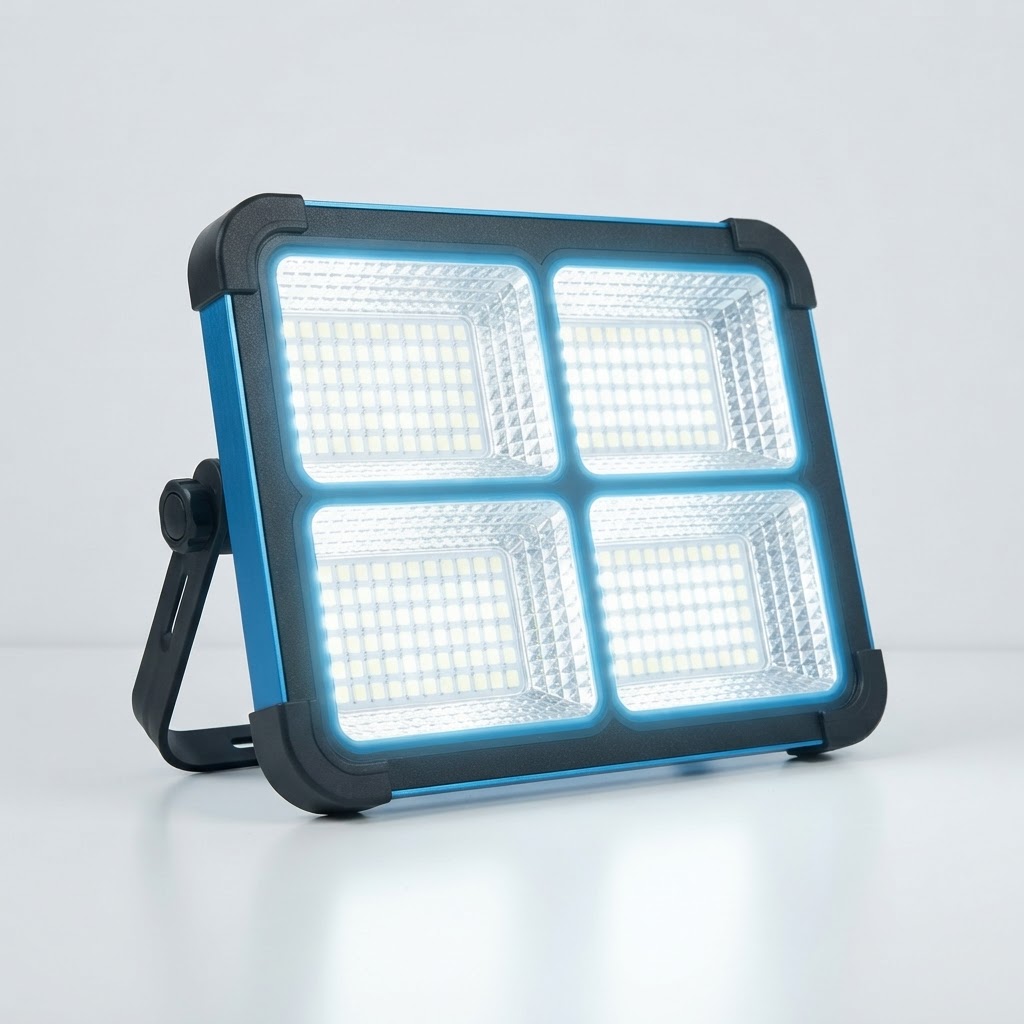
Understanding Lumens and Battery Life for Off-Grid Illumination
When preparing for remote wilderness trips, understanding how light intensity relates to power consumption helps prevent unexpected blackouts in camp.
What Are Lumens and How Many Do You Need Off-Grid?
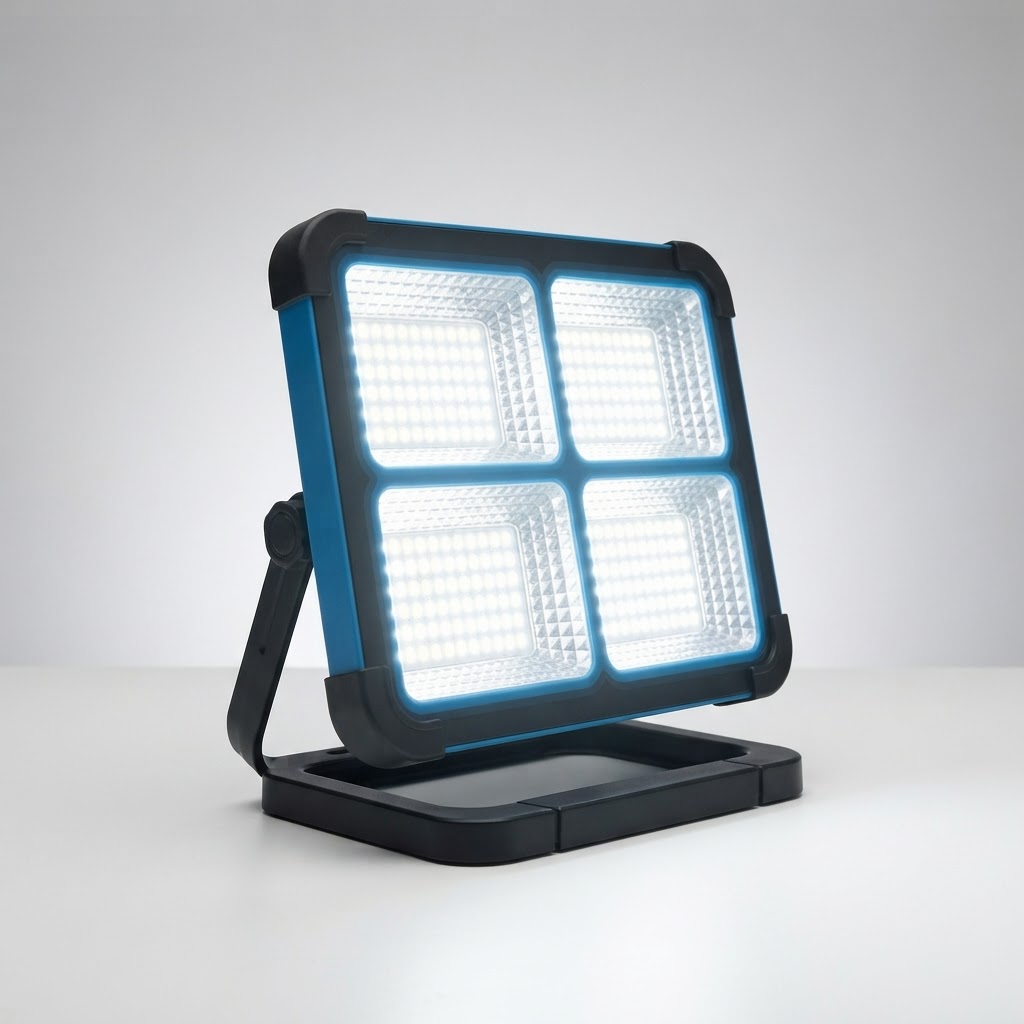
Lumens measure the total visible light emitted by a source. While a tent lantern producing 300 lumens is fine for reading, site security and emergency vehicle repairs require powerful flood illumination. A 100W light equipped with 288 LEDs pumping out 10,000 to 15,000 lumens easily lights up large campsites, perimeter trails, and work zones.
The Relationship Between Power Output and Battery Runtime
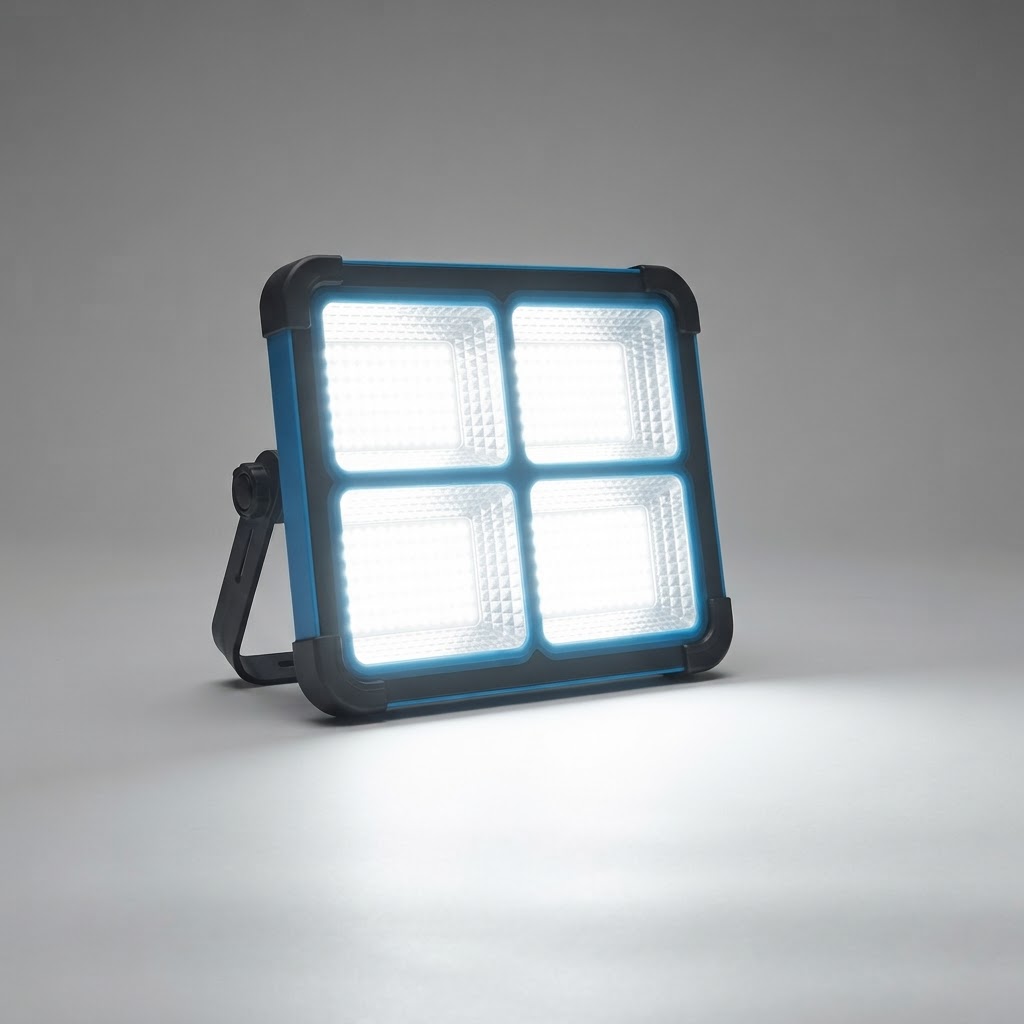
Running a light at maximum output places high demand on the battery cell, which operates at 3.7VV internal output. At full power in white or warm light modes, a high-capacity unit delivers 6–8 hours of continuous operation. Monitoring consumption is simple using integrated 4 battery indicator lights.
How Smooth Dimming Preserves Essential Energy
You don't always need 15,000 lumens while dining or sitting around camp. Lights featuring stepless dimming allow you to adjust output continuously from 100% down to 5%. Lowering the output drastically reduces watt draw, stretching battery availability across multiple nights without needing an immediate recharge. As covered in the main guide, managing output level is key to off-grid independence.Dual Charging as a Runtime Multiplier
To ensure your light is always ready, dual charging options combine USB fast charging before departure with a built-in solar panel for daily energy top-offs under direct sunlight.Read the full guide: The Complete Guide to the Best Emergency Lighting for Off-Grid Camping